Plastering and Rendering Done to a Flat, Lasting Finish
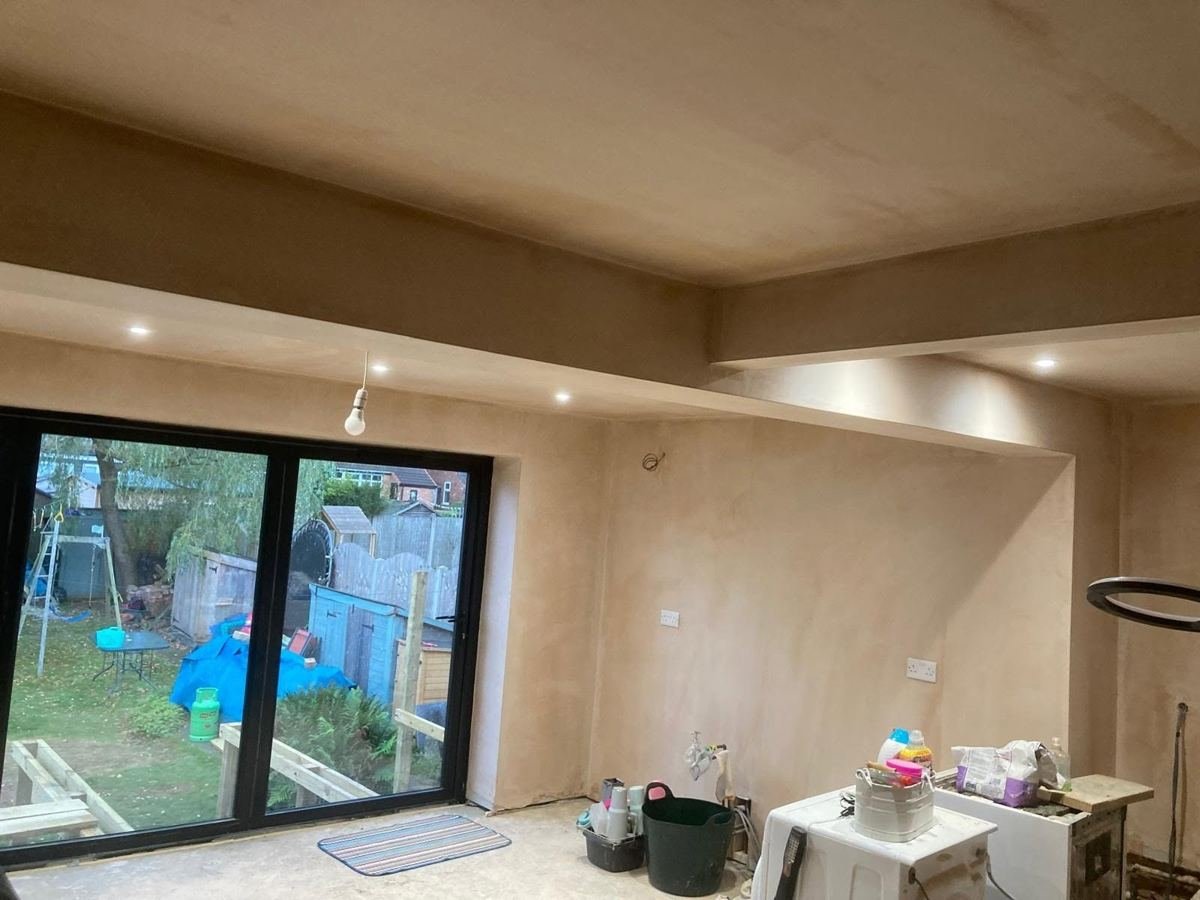
Plastering and rendering are two related but distinct trades: plastering covers internal walls and ceilings with a smooth finish ready for decoration, while rendering applies a protective, weatherproof coating to external brickwork. It's usually needed after building work such as an extension or conversion, when older plaster has cracked or blown, or when external render has failed and is letting damp into the brickwork. The work involves preparing the surface, applying a base coat where needed, then finishing with a smooth skim internally or a textured or smooth render externally. Getting the base coat and preparation right is what determines whether the finish stays flat and crack free for years rather than months.
External render in particular needs to be suited to the exposure of the wall, since properties across Retford and Nottinghamshire facing prevailing weather need a heavier-duty specification than sheltered elevations.
What's included
- Skimming and plastering to a smooth, flat finish
- External render applied for weather protection
- Existing finishes matched where repairs are needed
- Ceilings and walls prepared before plastering
- Beading and corners finished cleanly
- Suitable after extensions, conversions or renovations
- Dust and mess kept to a minimum during the work
Frequently Asked Questions About Plastering & Rendering
What is the difference between plastering and rendering?
Plastering is the application of a smooth finish to internal walls and ceilings, ready for painting or decorating, while rendering is a protective coating applied to external brickwork or blockwork. Both involve similar preparation and application techniques but use different materials suited to internal versus external conditions. Plastering is typically a smooth skim finish, while render can be smooth, textured or a decorative finish depending on preference.
When do I need new plastering or rendering?
New plastering is usually needed when existing plaster has cracked, blown or become uneven, or after building work such as an extension leaves new walls that need finishing. New rendering is typically needed when existing render has cracked or is letting damp into the brickwork, or when refreshing the exterior appearance of a property. Cracking around windows or doors is often an early sign that render needs attention before damp becomes a bigger problem.
How much does plastering or rendering cost?
Costs depend on the area being covered, whether it's a single room or a full property, and the type of finish chosen, particularly for external render. Rooms with awkward ceilings, coving or extensive prep work generally cost more than a straightforward flat wall. An accurate price needs a site visit, since the condition of the existing surface significantly affects preparation time.
How long does plastering or rendering take?
A single room typically takes one to two days to plaster, including drying time between coats, while a full property can take a week or more depending on size. External rendering usually takes longer per area than internal plastering, since it needs to be applied in suitable weather conditions. Rushing drying times is one of the most common causes of cracking, so realistic scheduling matters more than speed.
Is professional plastering worth it?
Professional plastering and rendering are generally worth it because a smooth, flat, crack free finish depends on experience and proper technique that's hard to achieve without practice. Poorly applied plaster or render is prone to cracking, bubbling or uneven texture that shows clearly once painted or dry. Professional work also tends to match existing finishes more closely when only part of a property needs attention.
How long does plastering last?
Well applied plaster can last for many decades with no significant maintenance, while properly applied render typically lasts fifteen to twenty five years depending on exposure and material. Longevity depends heavily on correct preparation and application rather than the finish alone. Render on more exposed elevations may need attention sooner than sheltered walls, regardless of how well it was originally applied.
Other services
Ready to start your project?
Tell us about the job and we'll give you honest advice and a clear quote, no pressure.